Tiffany Dragonfly Lamp: History, Designs and How to Choose One
The Tiffany dragonfly lamp is one of the most recognisable designs in stained glass lighting. A ring of dragonflies circles the shade, their wings cut from textured glass and their bodies glowing like jewels. This guide explains where the design came from, how a dragonfly Tiffany lamp is made, the main styles you will see today, and what to check before you buy or order one.
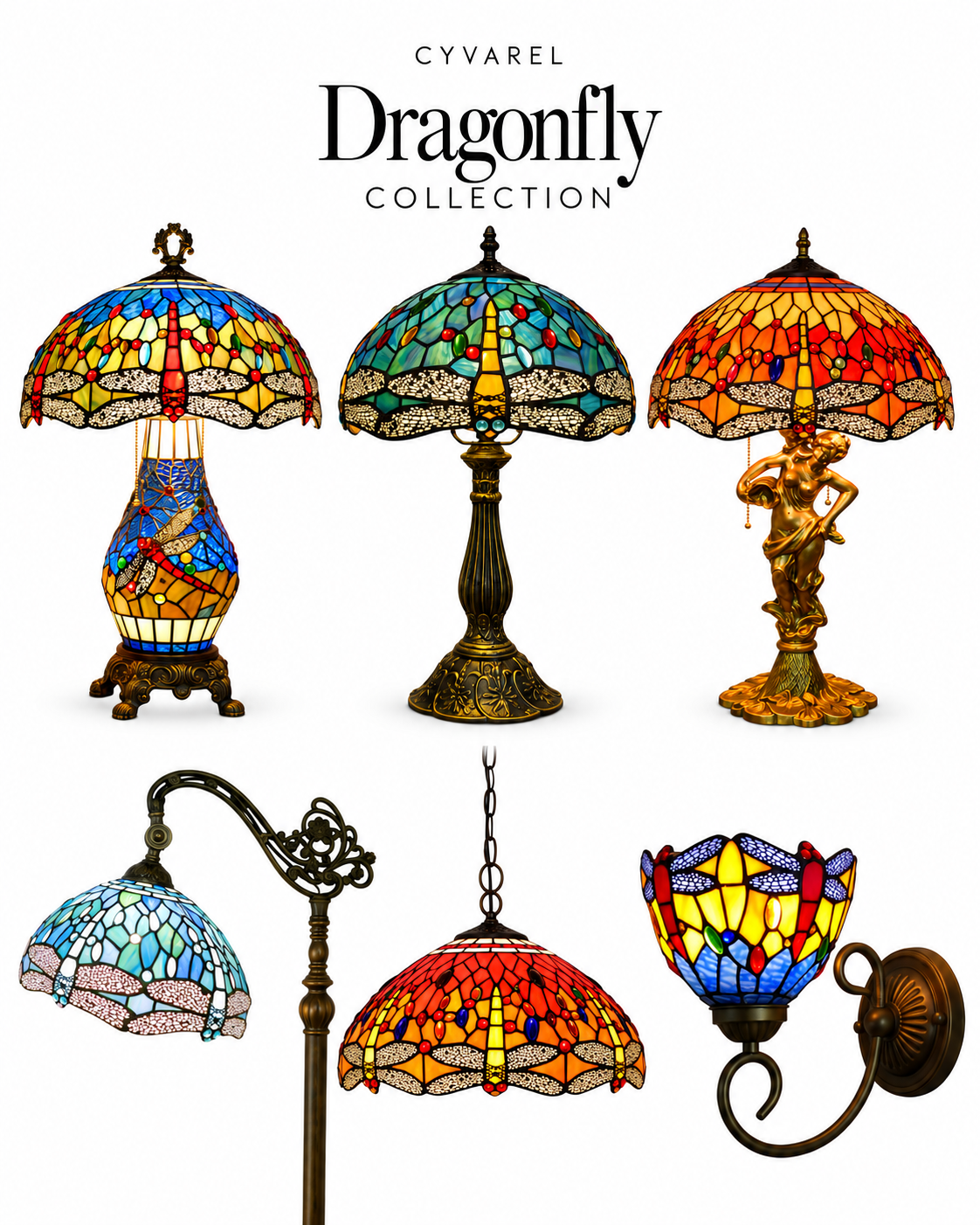
Where the dragonfly Tiffany lamp came from
The dragonfly design was created at Tiffany Studios in New York around 1900. It is credited to Clara Driscoll, who led the studio’s women’s glass-cutting department and designed many of its best-known shades. Dragonfly lamps were shown at the Paris Exposition Universelle of 1900, at the height of the Art Nouveau movement, when designers across Europe and America were turning to insects, flowers and water plants for inspiration.
The dragonfly suited that mood perfectly. Its long body and veined wings could be drawn as strong lines in lead and copper foil, while the background glass suggested water, sky or summer light. Tiffany Studios produced the design in many sizes and colourways, from cone-shaped shades to domes with an irregular lower edge that follows the wing tips.
Original Tiffany Studios dragonfly lamps are now museum and auction pieces. Today, almost every Tiffany dragonfly lamp on the market is a Tiffany-style piece made with the same copper-foil technique. If you want to know how to tell the two apart, read our guide to real vs reproduction Tiffany lamps.
What the dragonfly design means
In many cultures the dragonfly stands for change, lightness and renewal, because it begins life in water and ends it in the air. In a lamp, that idea becomes visual: the dark crown of the shade reads as sky or water, and the dragonflies seem to hover around the light. This is one reason the design remains popular as a gift and as a centrepiece for living rooms and reading corners.
Anatomy of a dragonfly Tiffany lamp
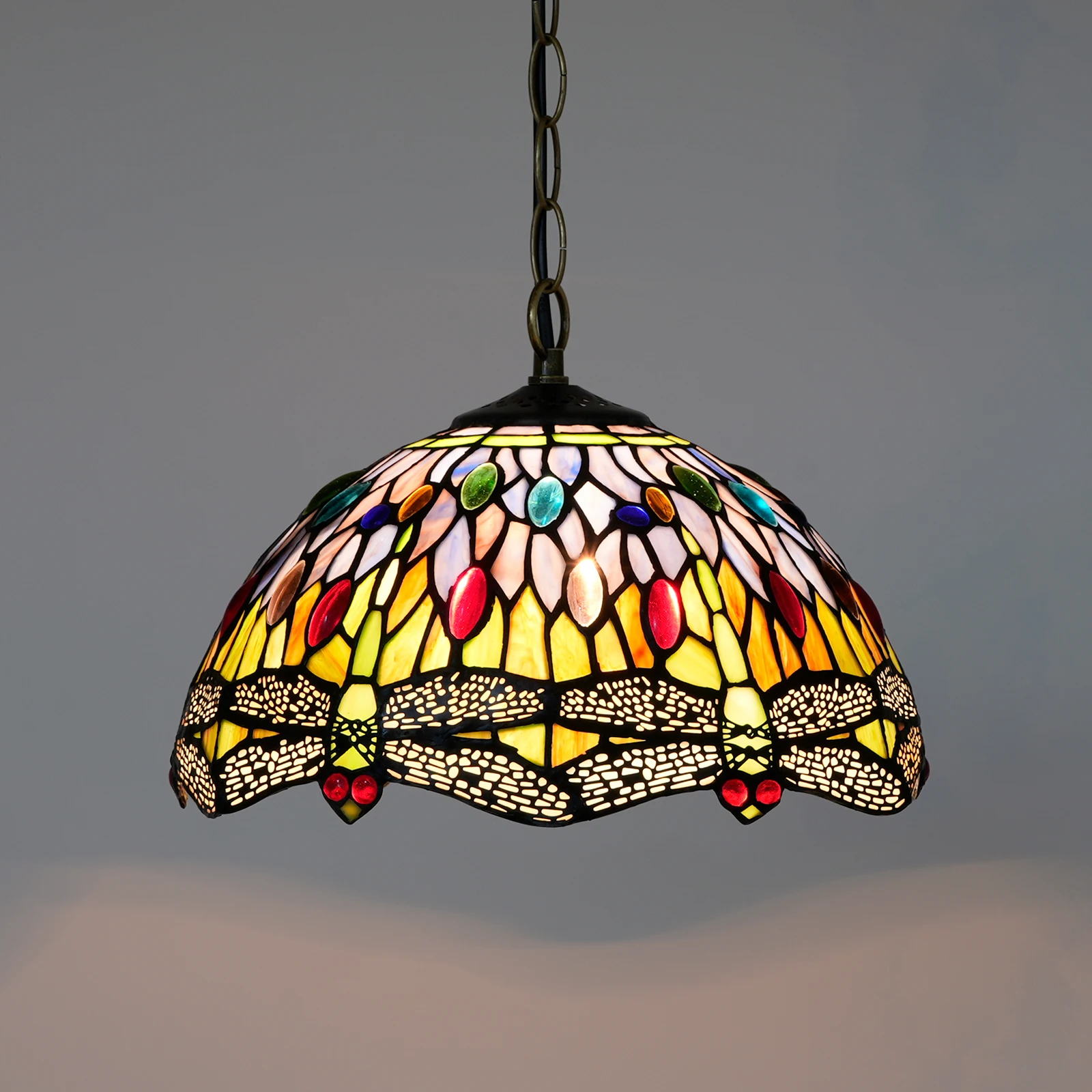
Most dragonfly shades share the same building blocks. Knowing them helps you compare designs and spot quality.
- The dragonfly band. Usually six to twelve dragonflies circle the lower half of the shade. Their wings are often cut from white or pale glass with a fine textured or filigree pattern, so they catch the light differently from the background.
- Jewel cabochons. Many designs set small rounded glass jewels into the dragonfly bodies or across the crown. When the lamp is lit they glow like beads.
- The background glass. This is where colour choices make the biggest difference: cobalt blue, turquoise, amber, red-orange and green are all classic.
- The lower edge. Some shades have a straight hem; others follow the outline of the wings for a scalloped edge.
- The base. From slim bronze-finish columns to sculpted animal bases, the base sets the overall style.
Popular dragonfly lamp colours
The same pattern can look completely different depending on the glass palette. These are some of the most requested colourways.
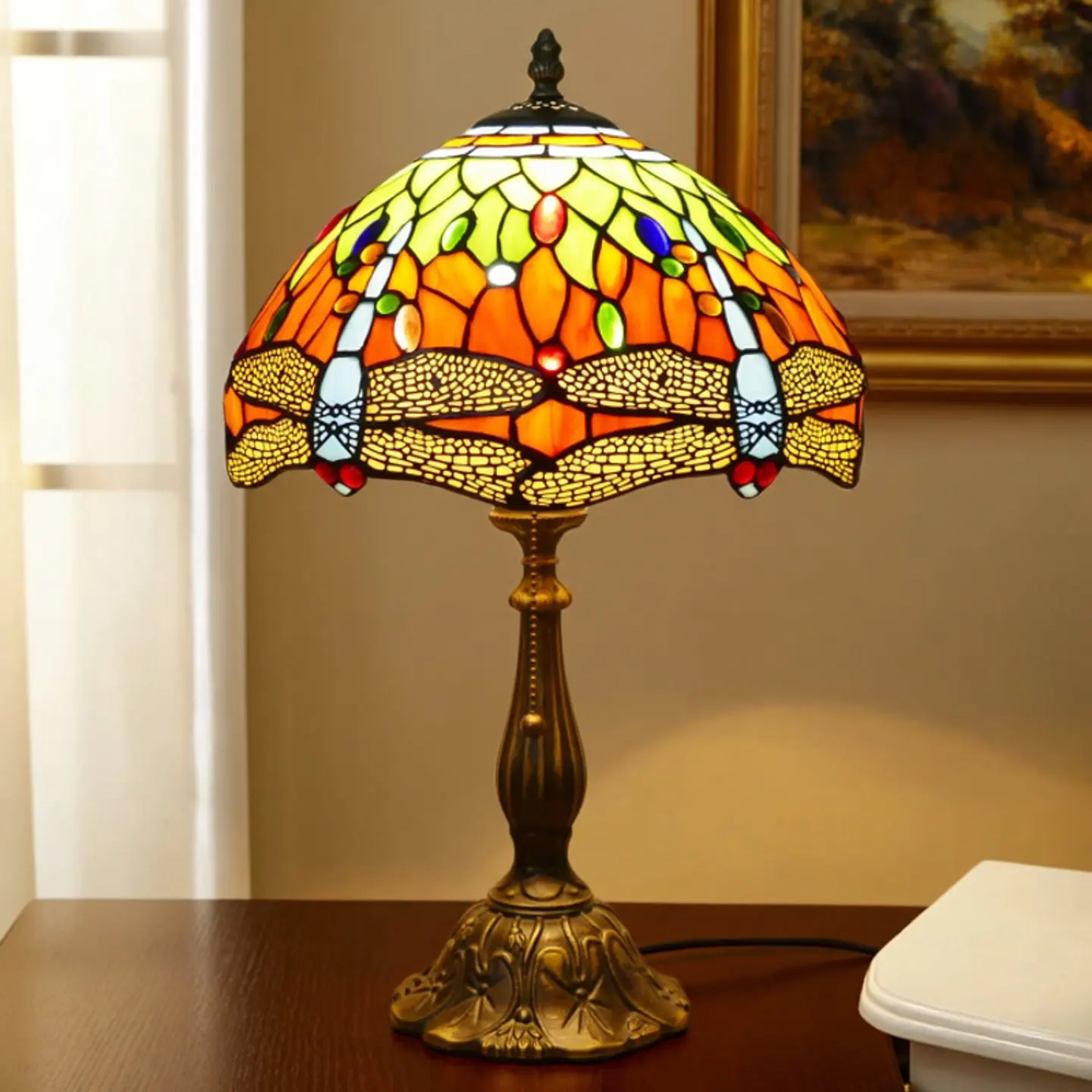
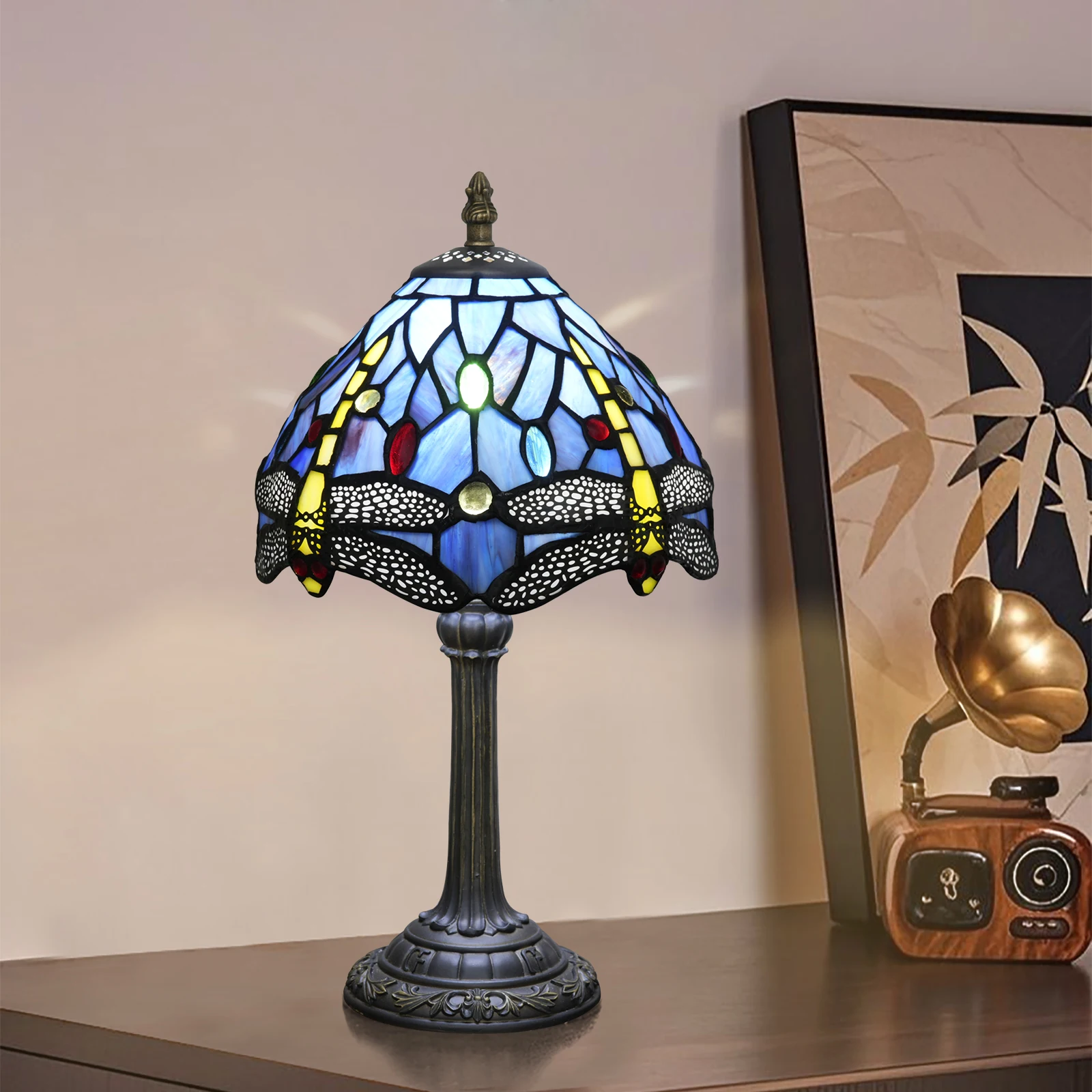
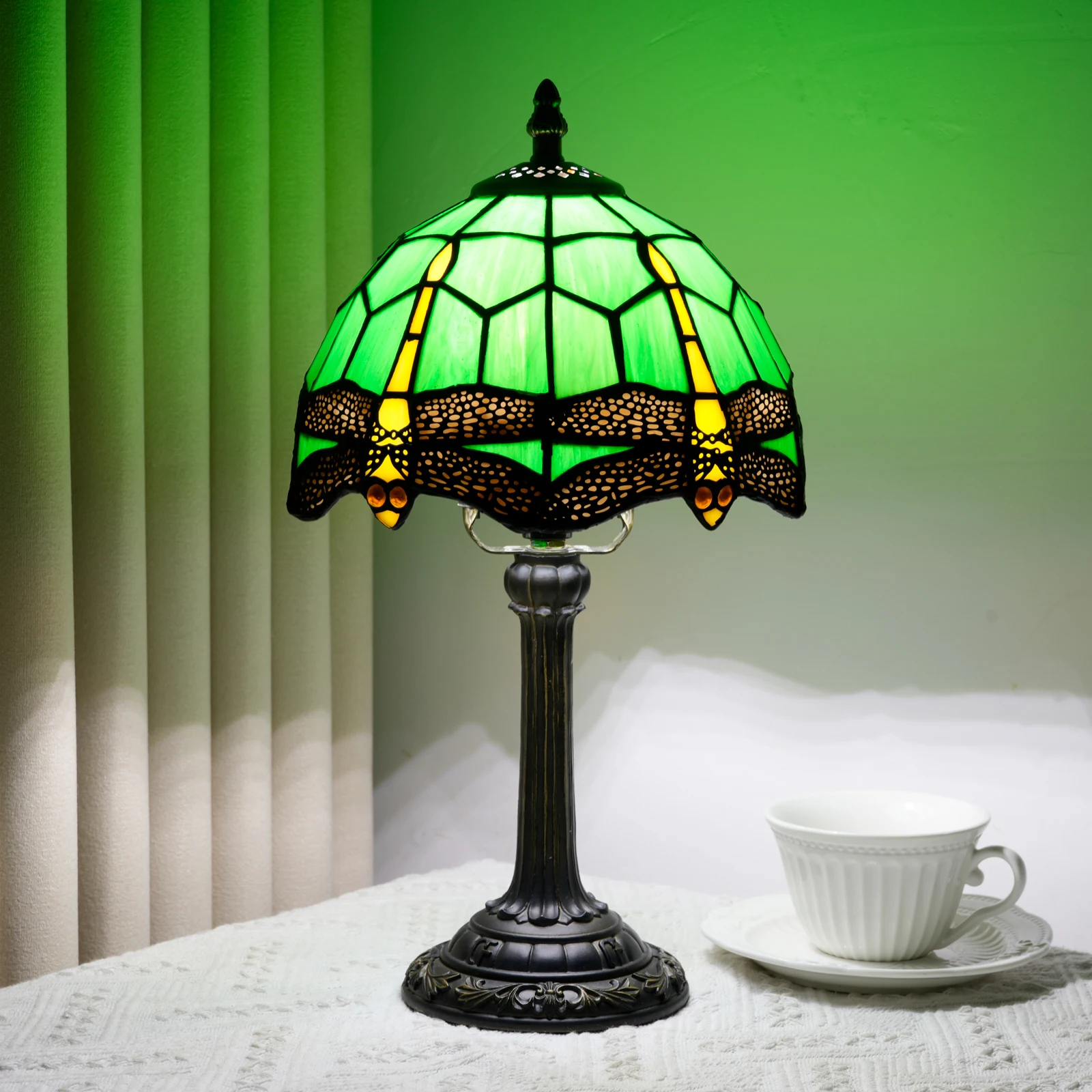
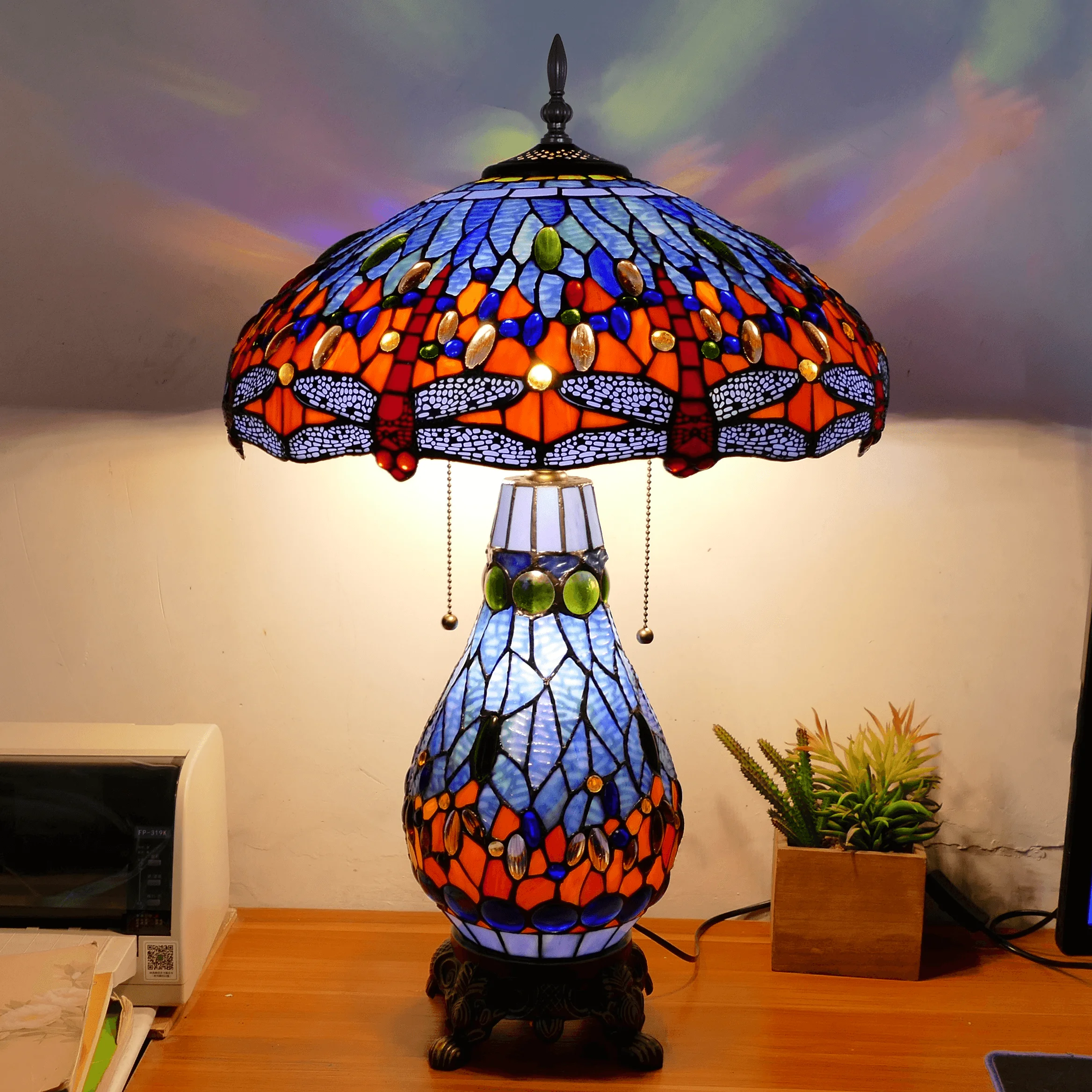
Blue dragonfly Tiffany lamps feel calm and cool, and suit modern rooms with white or grey walls. Amber, red and orange designs give the warm, golden glow most people associate with Tiffany lighting. Green designs sit well in libraries and studies with dark wood.
Types of dragonfly Tiffany lamps
Dragonfly table lamps
The most common format. A 12-inch shade suits a bedside table or a small desk; 16 inches and above makes a statement on a console or living-room side table. Pull-chain switches under the shade are typical.
Dragonfly floor lamps
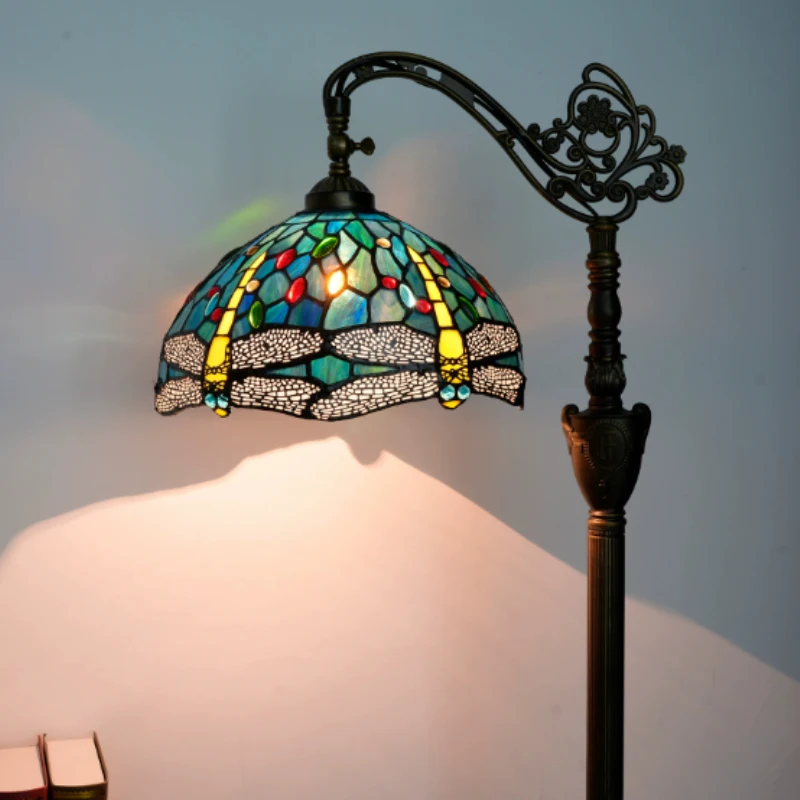
A floor lamp lifts the shade to eye level beside a sofa or reading chair. Bridge-arm designs angle the shade over a seat, while upright designs give ambient light in a corner. See more in our Tiffany style floor lamps range.
Dragonfly ceiling lights and pendants
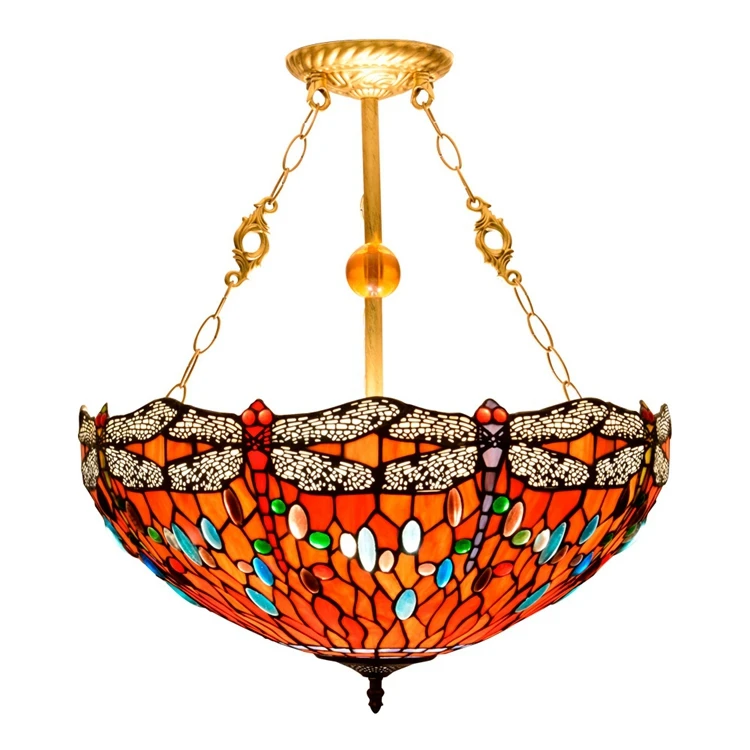
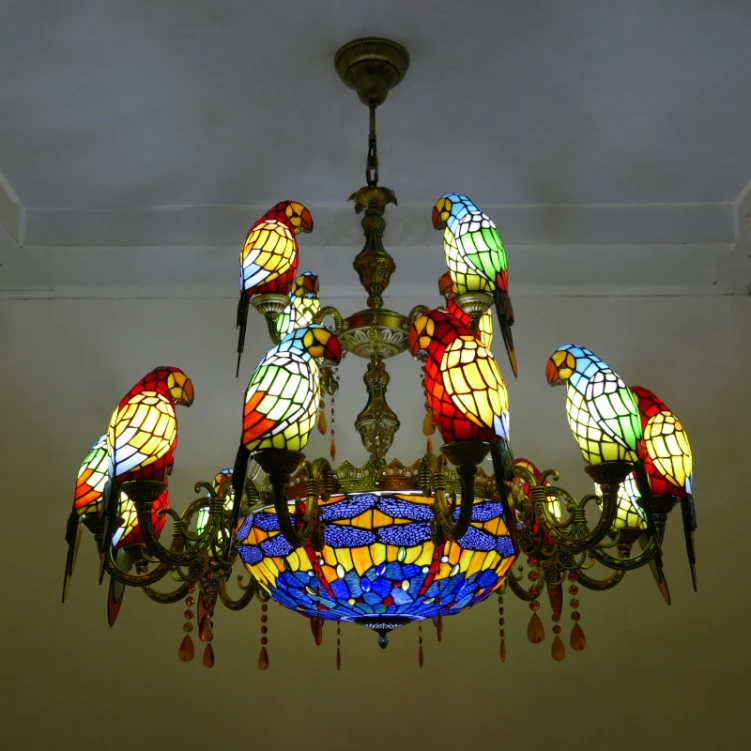
Dome pendants send light down over a dining table or island. Inverted bowls point light toward the ceiling for a softer glow. For larger rooms, multi-light chandeliers combine a dragonfly bowl with figurative arms.
Dragonfly wall sconces
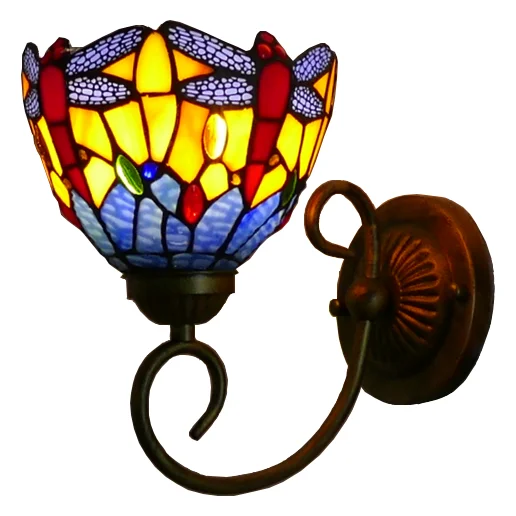
Sconces work in pairs beside a bed, mirror or fireplace, and are a practical way to repeat the dragonfly theme across a room.
Sculptural dragonfly lamps
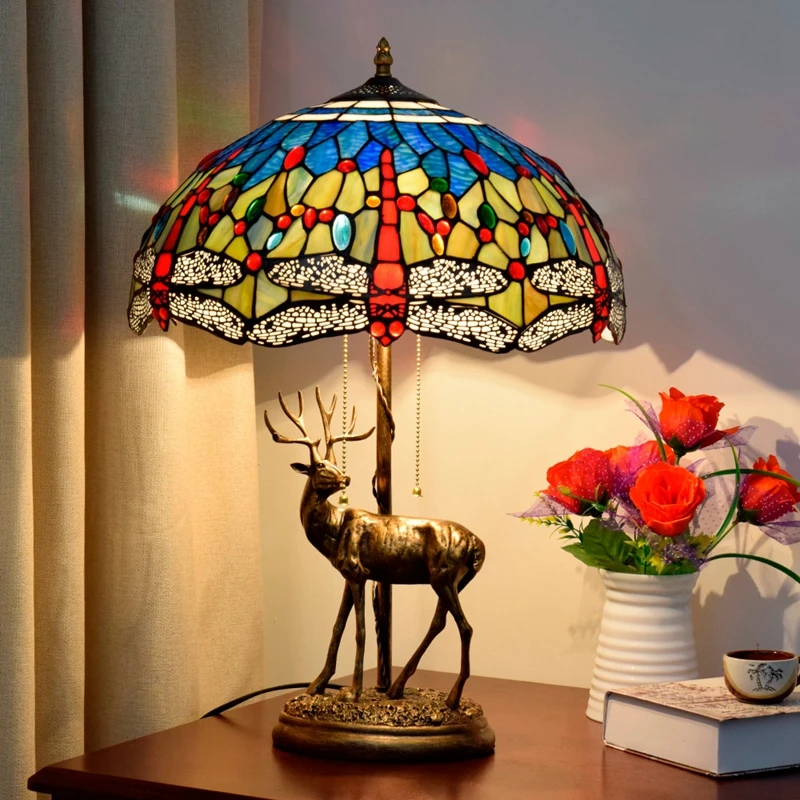
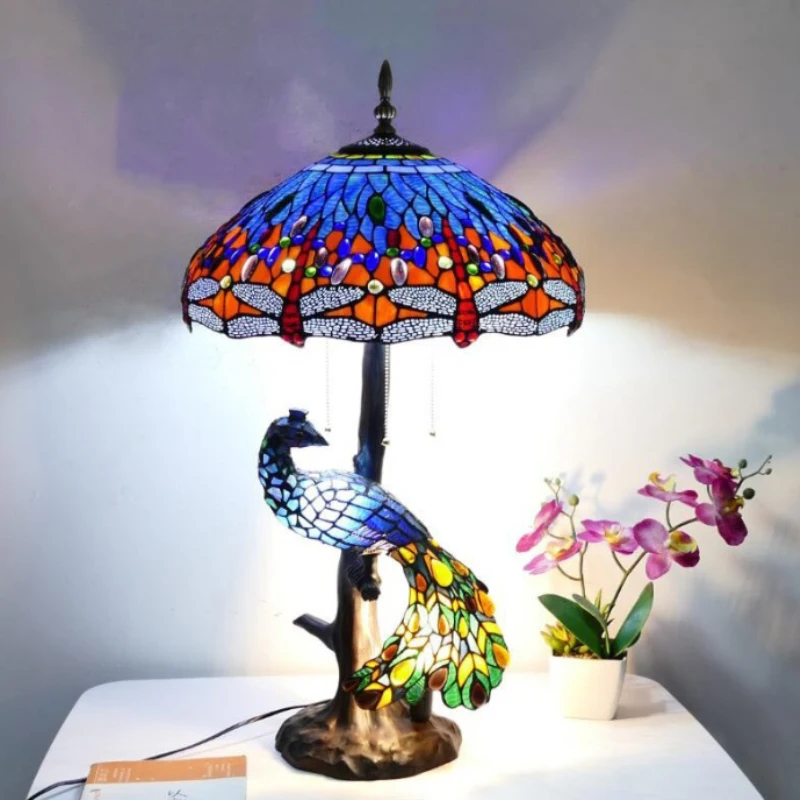
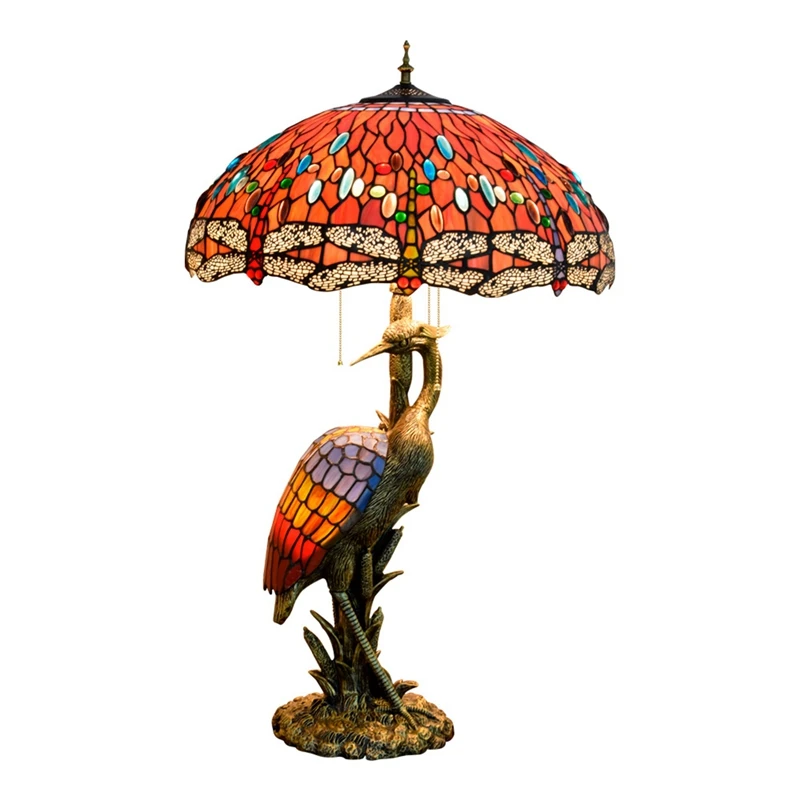
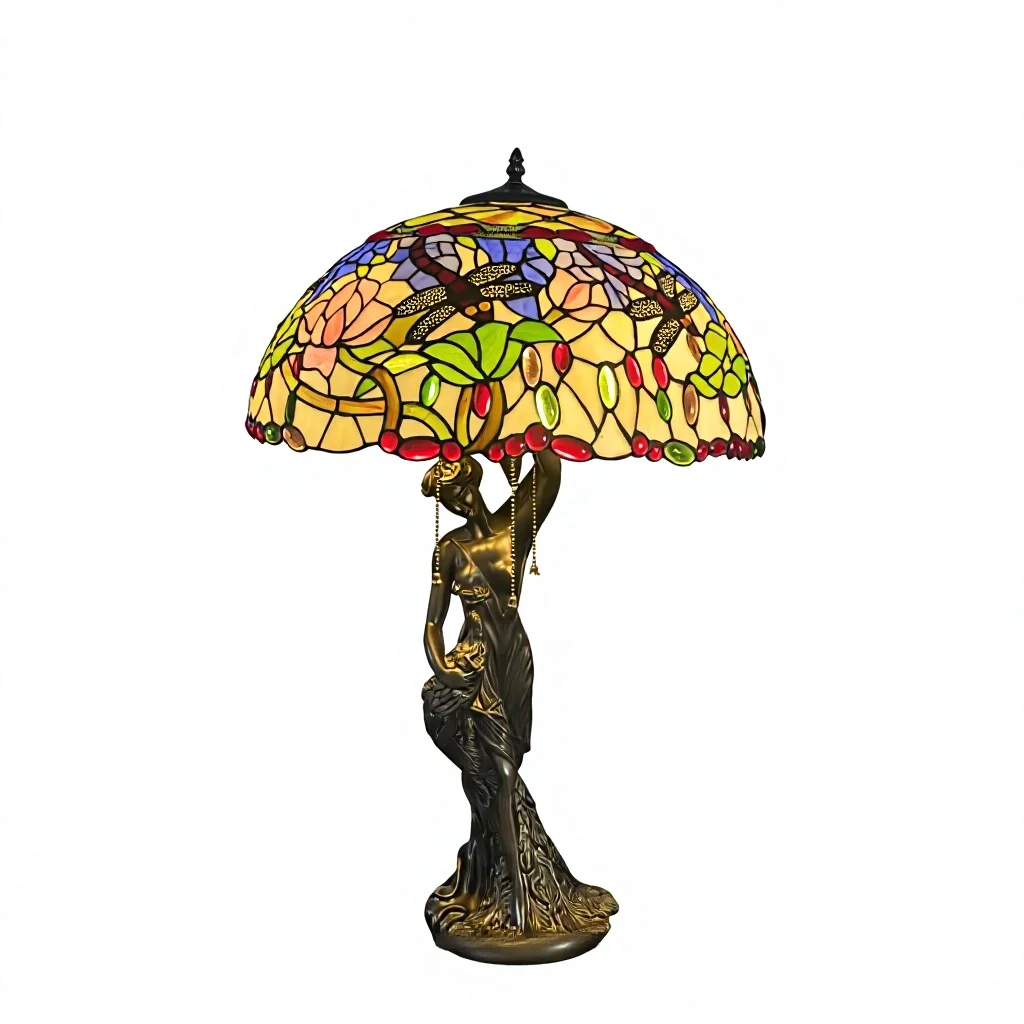
Figurative bases turn a lamp into a decorative object. They are popular with gift retailers and boutique hotels that want a piece guests will remember.
How a dragonfly Tiffany lamp is made
- Pattern. The shade design is drawn and divided into numbered pieces, one for each piece of glass.
- Glass selection and cutting. Each wing, body and background piece is chosen for colour and texture, then cut and ground to shape by hand.
- Copper foil. The edge of every piece is wrapped in thin copper foil.
- Soldering. The pieces are assembled on a mould and soldered together, inside and out.
- Patina and assembly. The solder lines are given a patina finish, then the shade is fitted to its base and wired.
We cover each step with workshop photos in How Tiffany Lamps Are Made.
How to choose a good dragonfly Tiffany lamp
| Check | What good looks like |
|---|---|
| Glass | Real stained glass with visible texture and colour variation, not printed or painted plastic. |
| Solder lines | Even, smooth lines with a consistent patina, no gaps between pieces. |
| Wings | Wing glass clearly different in texture from the background, so the dragonflies stand out when lit. |
| Base | Stable and heavy enough for the shade size, with a finish that matches the patina. |
| Size | 12 inches for bedside and desk use, 16 inches or more for living rooms and floor lamps. |
| Electrical | Bulb base, plug and voltage suitable for your country. |
For more on sizing and placement, read how to choose a Tiffany table lamp.
Buying dragonfly Tiffany lamps wholesale
CYVAREL makes Tiffany-style dragonfly lamps by hand in our workshop in Huizhou, China, for retailers, lighting brands and hospitality projects. Our Dragonfly Collection covers table lamps, floor lamps, pendants, wall sconces and sculptural lamps.
- MOQ is 30 pieces per design.
- Glass colours can be adjusted to suit your market.
- Bulb base, voltage, plug type and packaging are confirmed with your quotation.
- Read how we pack and ship on our shipping and delivery page.
Dragonfly Tiffany lamp FAQ
Who designed the Tiffany dragonfly lamp?
The design is credited to Clara Driscoll at Tiffany Studios, around 1900.
Is a Tiffany style dragonfly lamp real stained glass?
A well-made one is. Each piece of glass is cut by hand, wrapped in copper foil and soldered, the same method Tiffany Studios used.
What size dragonfly lamp should I buy?
A 12-inch shade suits bedside tables and desks. Choose 16 inches or more for living rooms, consoles and floor lamps.
What bulb should I use?
Use a bulb no stronger than the wattage marked on the lamp. Warm LED bulbs run cool and show the glass colours at their best. See our care guide for more.
Explore the Dragonfly Collection
Browse all dragonfly Tiffany lamps, or request a factory quote with the item numbers you like. Our team will reply with pricing, options and lead times.