Where Are Tiffany Lamps Made Today?
The original Tiffany lamps were made in New York. Today, most Tiffany-style lamps are handmade in China, many of them in Guangdong province, while a smaller number come from studios in the United States and Europe. Here is how production moved, and what it means if you are buying for a shop, a distribution business or a project.
Where the Originals Were Made
Original Tiffany lamps came from Tiffany Studios in New York, the firm led by Louis Comfort Tiffany. The glass was made at Tiffany’s own furnaces in Corona, Queens, and teams of craftspeople in New York cut and assembled the shades. Many famous designs came from the Women’s Glass Cutting Department led by Clara Driscoll, who is credited with the Dragonfly shade.
Tiffany Studios stopped production in the early 1930s, so no new originals have been made since. Read more in the story behind Tiffany Studios, and see how to tell a real Tiffany lamp from a reproduction.
Where Tiffany-Style Lamps Are Made Now
As demand for Tiffany-style lighting grew in the second half of the 20th century, production moved to places with the hand skills that copper-foil work needs and with supply chains for glass, metal bases and electrical parts. Today the majority of Tiffany-style lamps sold through retailers are made in China.
Some American and European studios still make lamps by hand, usually in smaller numbers and at higher prices. For a retailer or distributor who needs a wide range, repeat orders and export packing, a Chinese workshop is usually the practical source.
Why So Many Workshops Are in Guangdong
Guangdong is one of China’s main lighting manufacturing regions. Workshops there can source glass, metal parts, electrical components and packaging nearby, and ship through large export ports such as Shenzhen and Guangzhou. Our own workshop is in Huizhou, which borders Shenzhen; our Huizhou factory guide says more about the area.
Factory, Trading Company or Marketplace Seller?
When you look for a Tiffany lamp supplier in China, you will meet three kinds of seller: workshops that make the shades, trading companies that buy from several workshops, and marketplace stores that may be either. Each can work, but a direct factory relationship usually gives clearer answers on materials, lead times and changes. Signs you are talking to the maker:
- They can show the workshop itself, from pattern drawing and glass stock to foiling and soldering, not only finished lamps.
- Products have stable item numbers, and the same item number always means the same pattern and size.
- They can explain the piece count, glass type and base material of a specific item.
- Certificates name the products you are buying, and the supplier can explain who the applicant is.
- They offer samples before bulk production and tell you what can be changed.
Our guide on how to search for a Tiffany lamp manufacturer in China covers the search side in more detail.
Questions to Ask Before You Order
- What is the MOQ per design, and can one order combine several designs?
- Is the shade copper-foiled and soldered by hand?
- What glass is used, and can I see the colour under light?
- What is the base made of: bronze, zinc alloy, iron or resin?
- Which models are certified for my market, and what wiring and plug will they have?
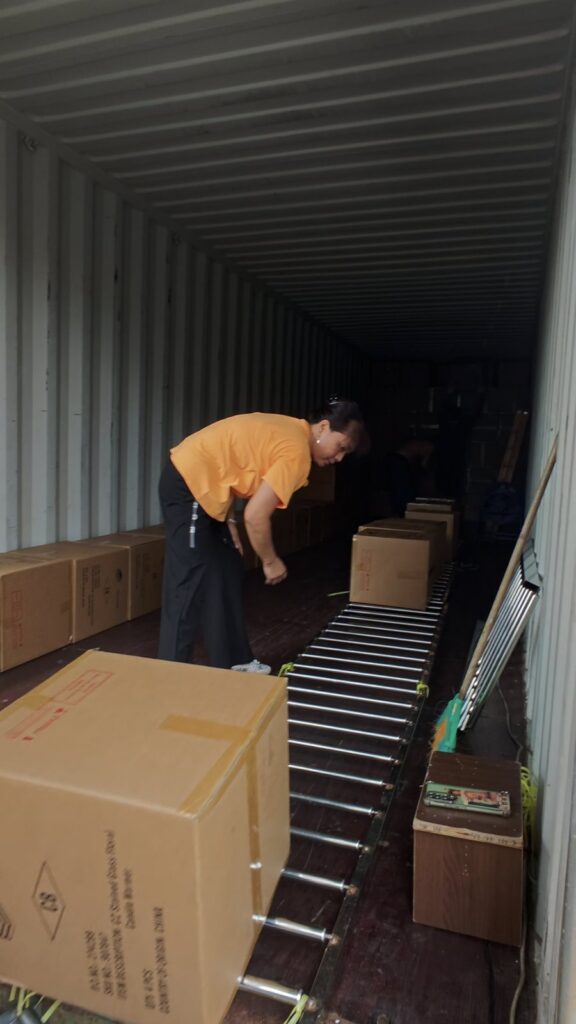
- How are the lamps packed for sea or air freight?
About Our Workshop in Huizhou
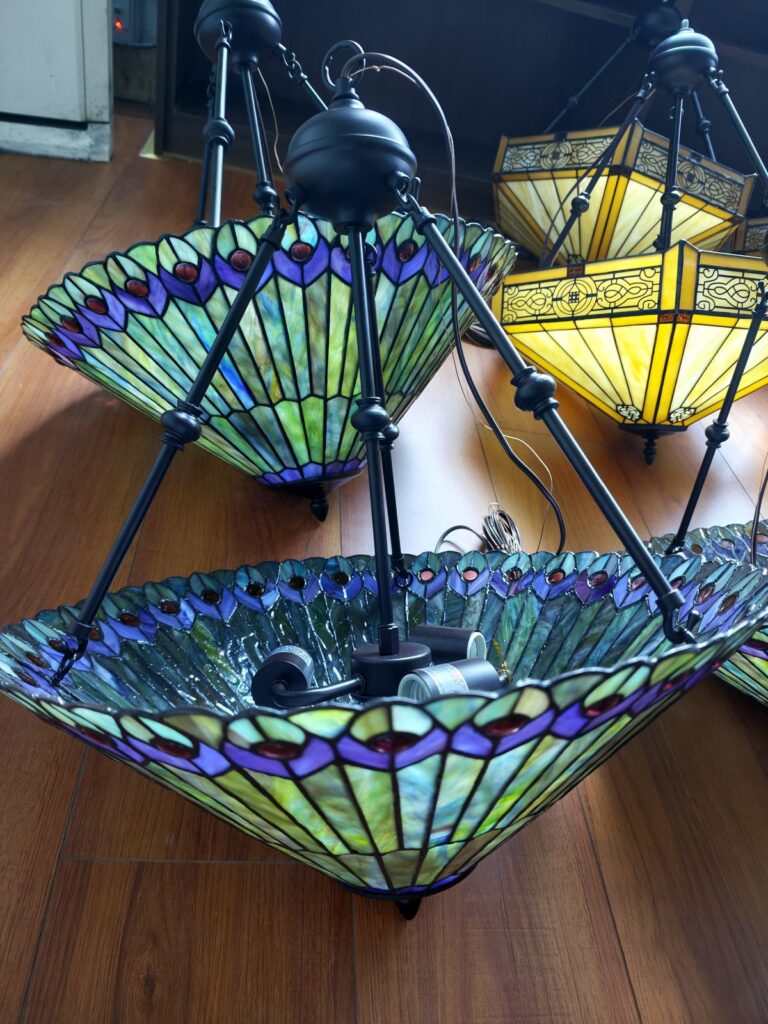
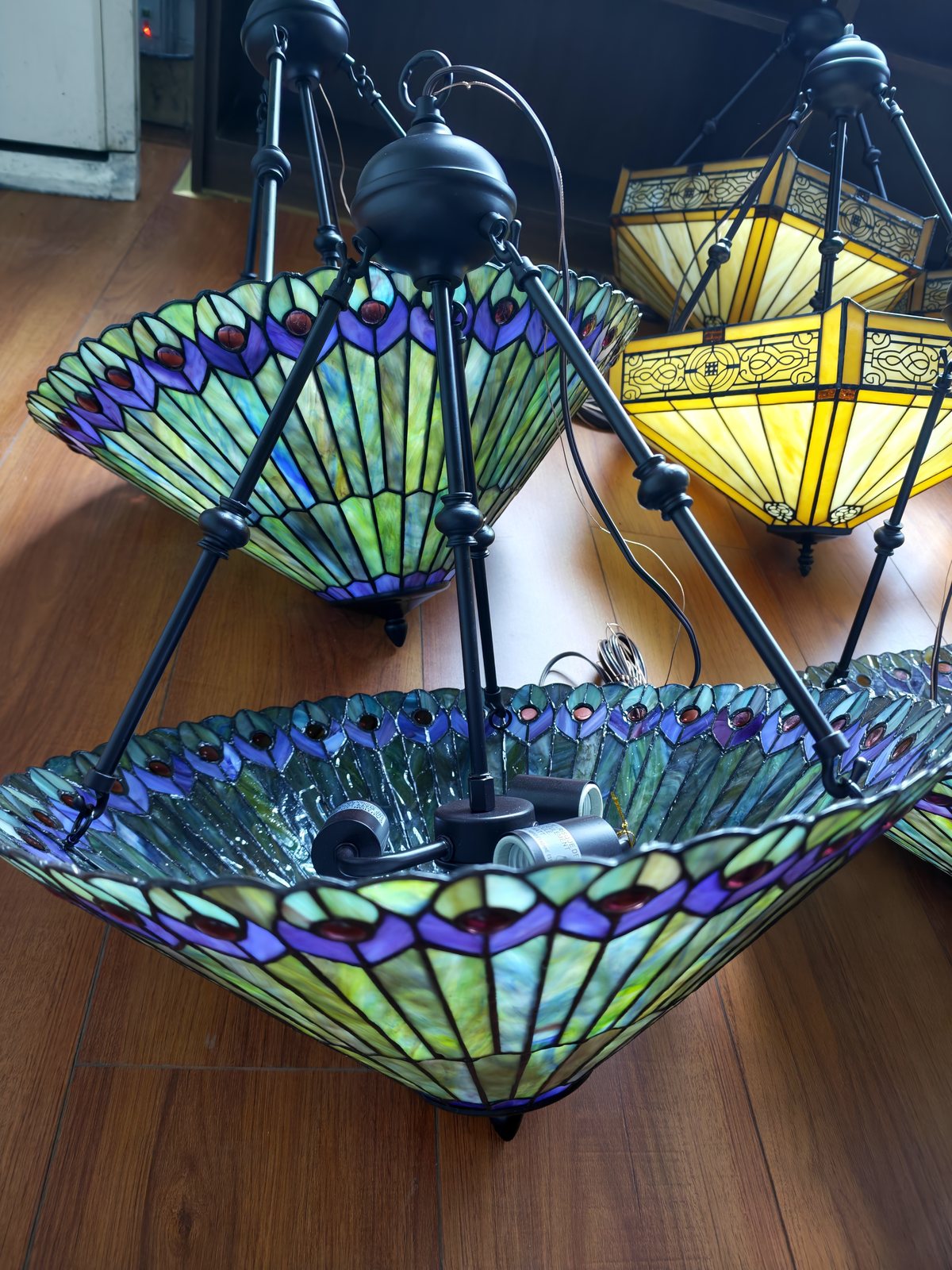
CYVAREL is a Tiffany-style lamp manufacturer in China. In our Huizhou workshop, shades are drawn, cut, foiled and soldered by hand, and our catalogue covers more than 2,000 designs across table lamps, floor lamps, ceiling lights, wall lamps, lampshades and stained glass screens. We supply wholesalers, retailers and interior projects with an MOQ of 30 pieces per design, take on OEM and ODM work, and have CE and UL certified models.
See how our shades are built in how Tiffany lamps are made, or go straight to wholesale ordering and our classic reproduction lamps.