How Tiffany Lamps Are Made: From Pattern to Finished Lamp
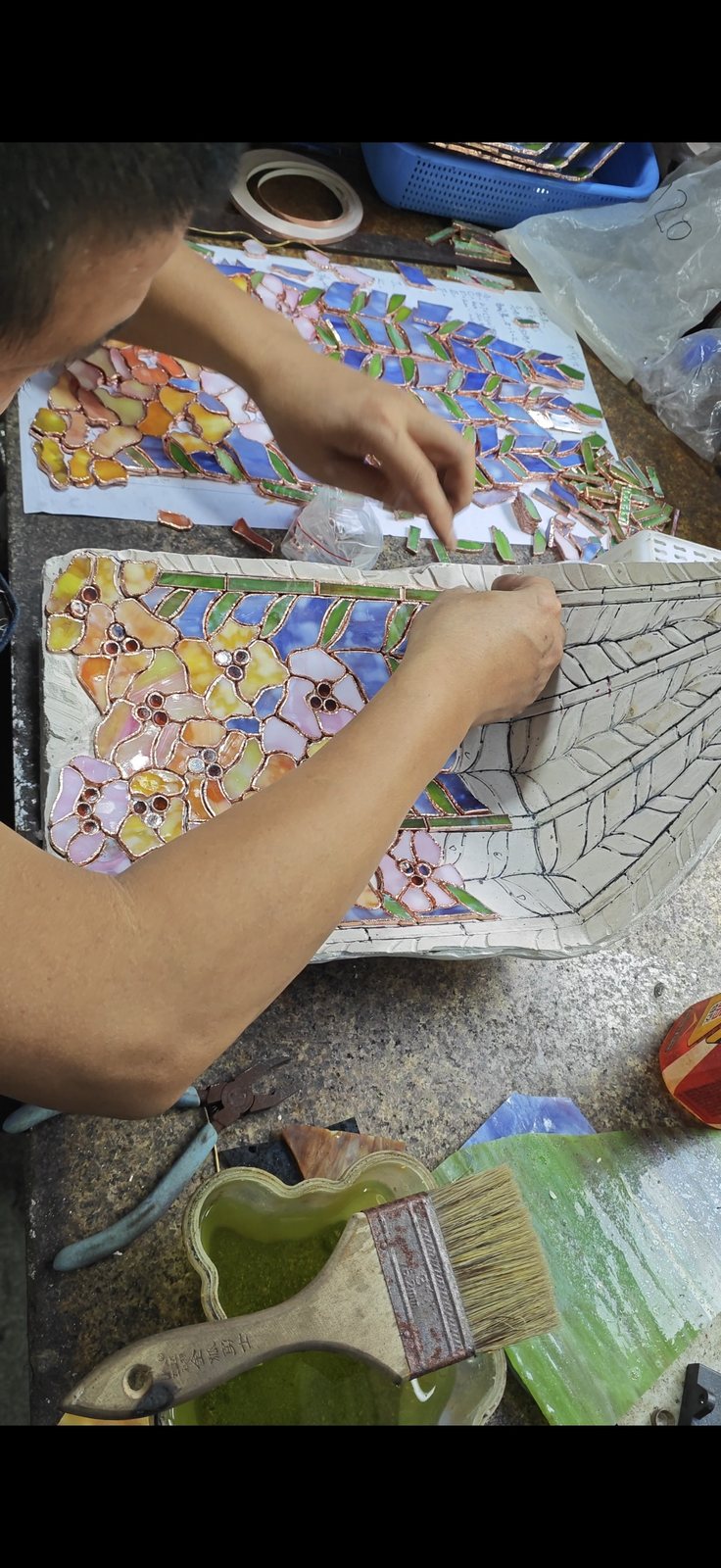
A Tiffany lamp shade is built from hundreds of hand-cut pieces of coloured glass. Each piece is wrapped in copper foil, and the pieces are soldered together over a form until they make a rigid shell. The method was developed in Louis Comfort Tiffany’s studios more than a century ago and has changed surprisingly little. Below are the steps as they happen in our workshop in Huizhou, China, with photos taken on our benches.
1. Draw the Pattern
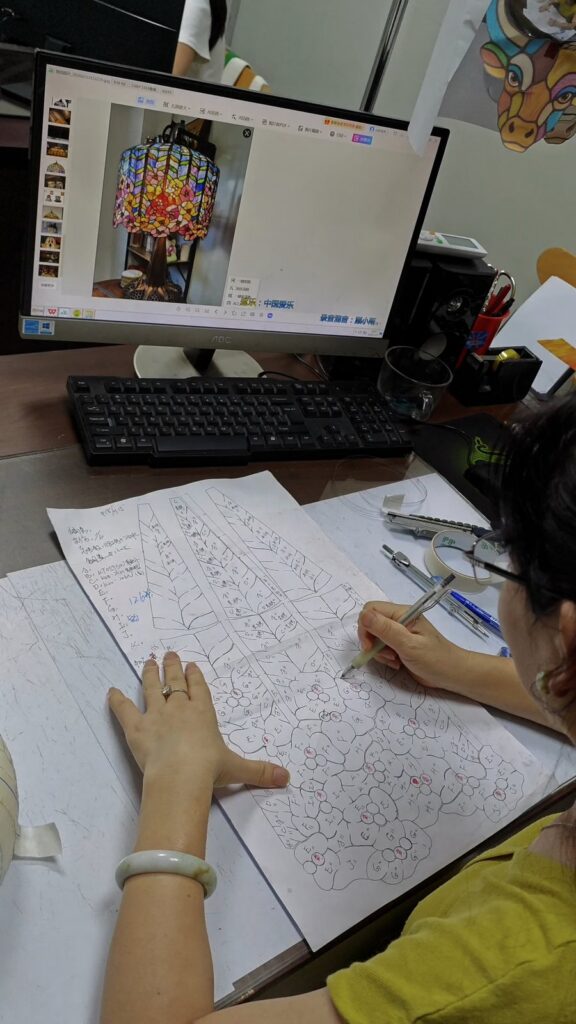
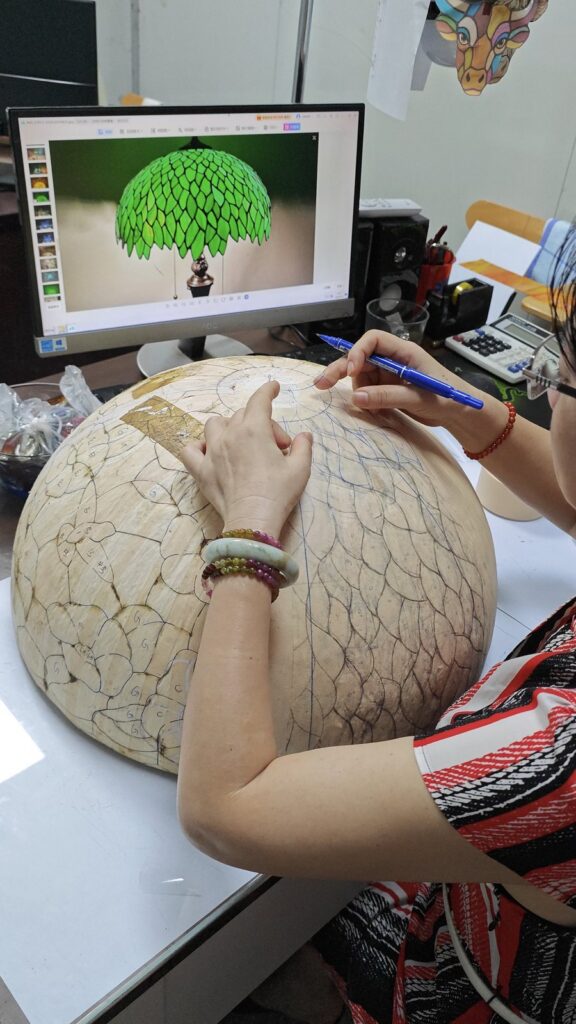
Every shade starts as a full-size drawing. The designer lays out each leaf, petal or wing as a separate numbered piece and notes the colour it should be. For domed and cone-shaped shades, the layout is also marked directly onto the shade form, so the flat pattern and the curved surface match.
2. Choose the Glass
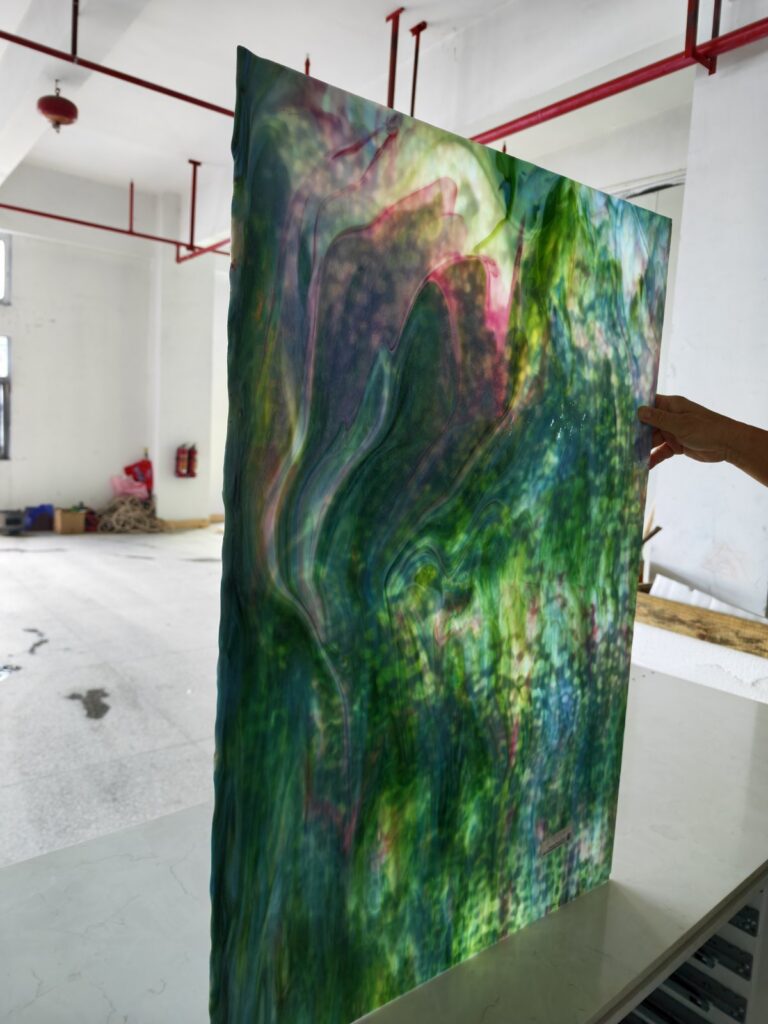
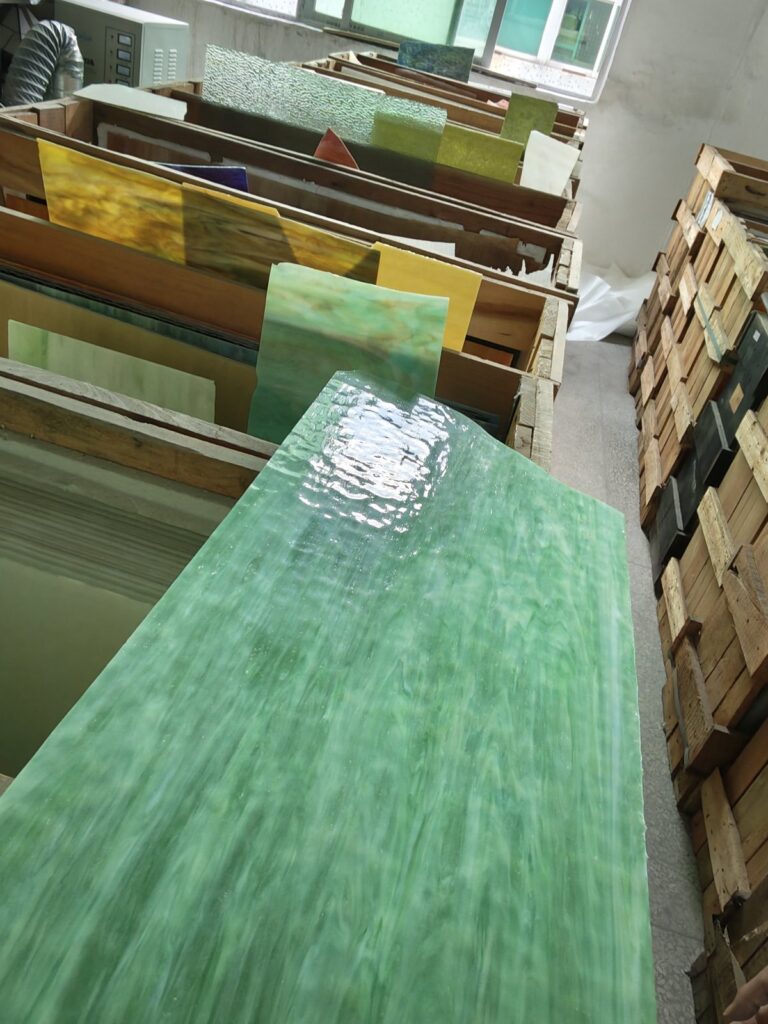
Glass choice decides how a lamp looks when it is lit. Tiffany-style shades use opalescent glass, often with streaks, mottling or texture, so a single piece can shift from one colour to another. Sheets are held up to the light and chosen for the part of the design they will become: a pale streak for a highlight, a darker area for a shadow. Our glass colour library shows the references we work from.
3. Cut and Grind Each Piece
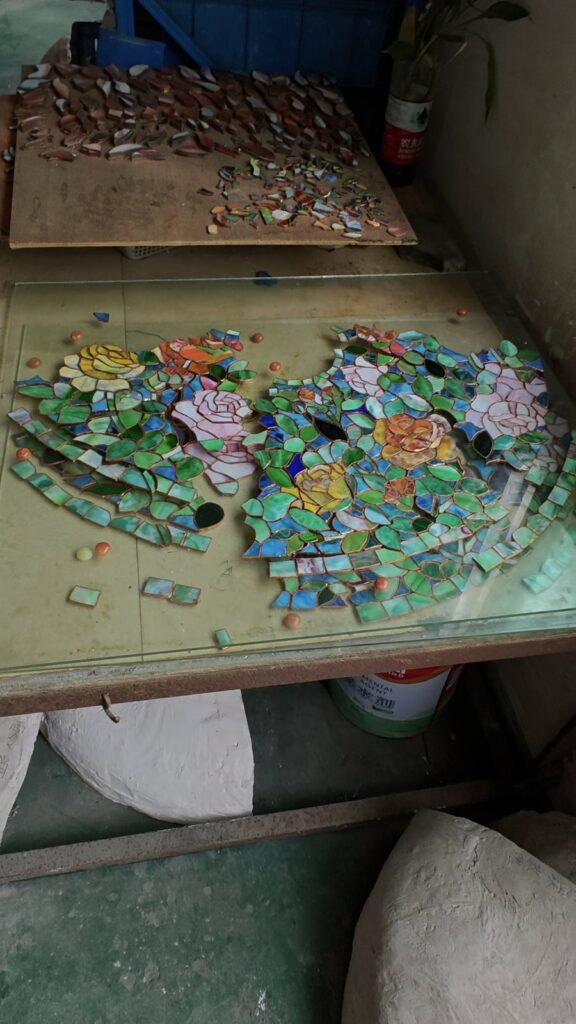
Pattern pieces are traced onto the chosen glass, scored and broken out by hand. Each piece is then ground at the edges so it fits its neighbours closely. Tight fitting matters: gaps fill with solder, and wide solder lines make a shade look heavy.
4. Wrap the Edges in Copper Foil
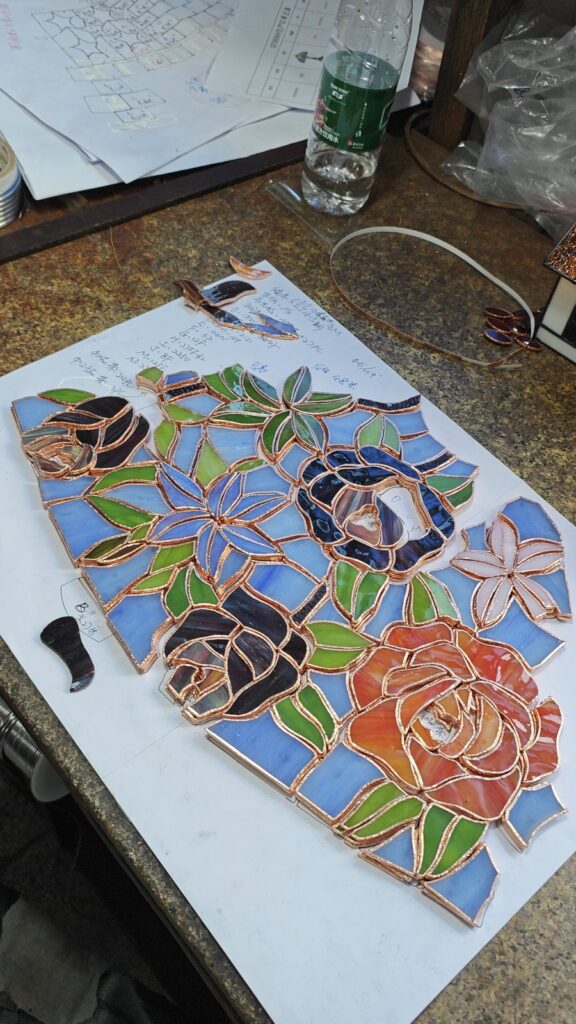
Every piece is edged with thin, adhesive copper foil, which is pressed down and burnished so it grips the glass. The foil gives the solder something to bond to. This copper-foil method lets the pieces be much smaller and more curved than traditional lead came allows, which is what makes the fine lines of a Tiffany design possible.
5. Assemble the Shade on the Form
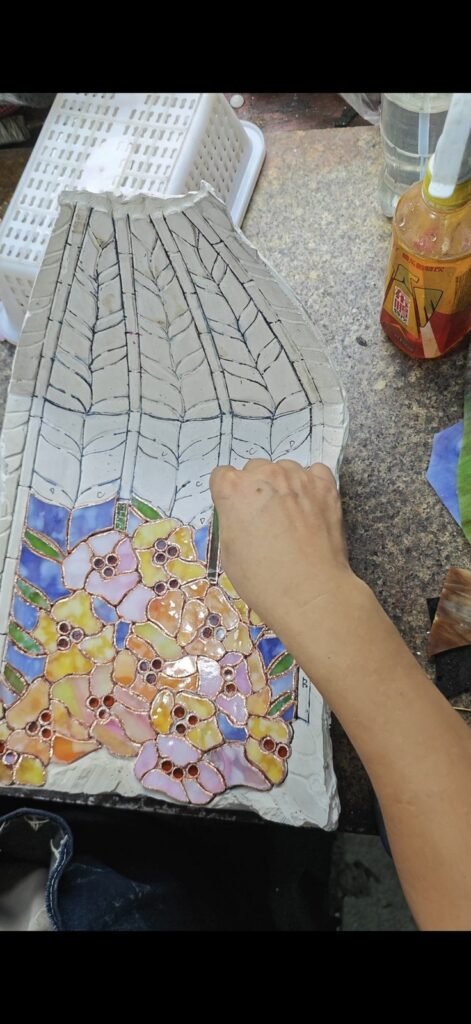
The foiled pieces go onto the shade form one by one, following the marked pattern. Craftspeople work row by row, checking colour and fit as the design comes together, and tack the pieces in place so nothing shifts.
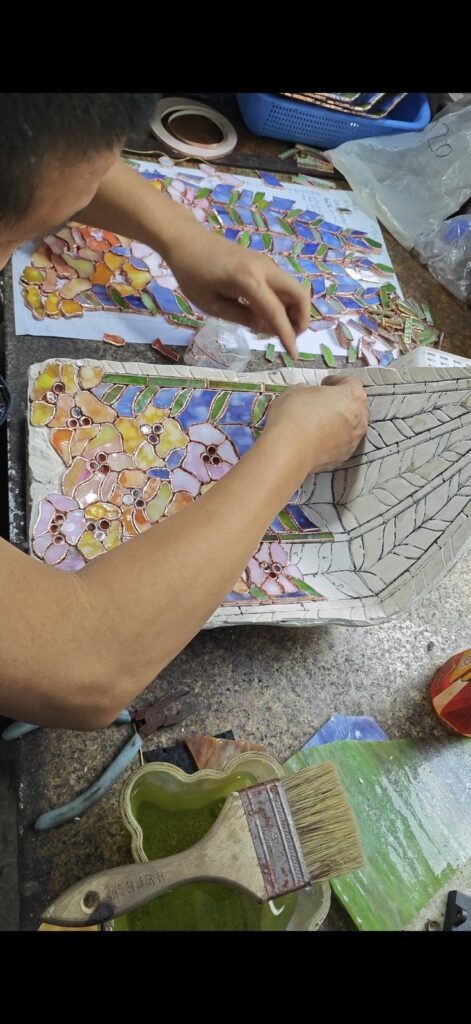
6. Solder the Seams
Solder is run along every foiled seam, first to hold the pieces together and then as a smooth bead along each line. Once the outside is complete, the shade is lifted off the form and the inside seams are soldered too. The finished shell is rigid enough to carry its own weight on the base.
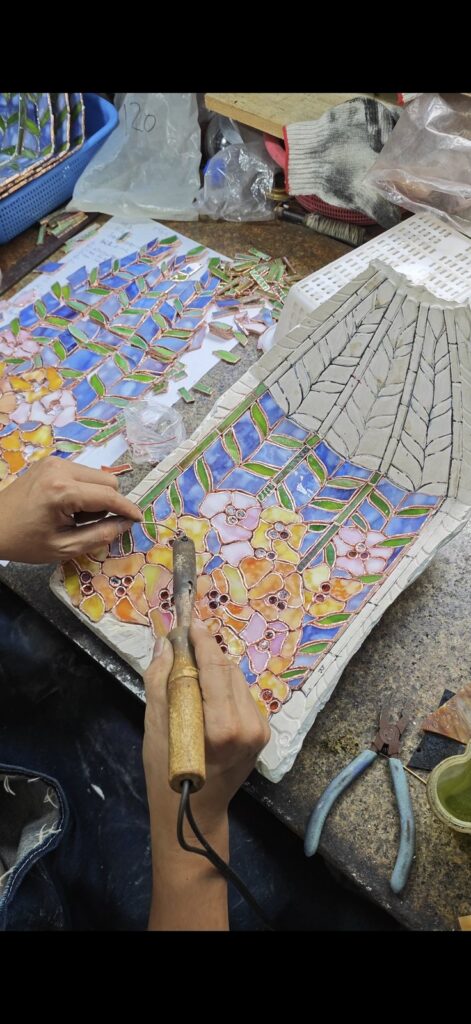
7. Patina, Clean and Check Under Light
Bare solder is bright silver, so the lines are treated with a patina, commonly in bronze, black or green tones, to suit the design. The shade is cleaned of flux and polish, then checked under light, where uneven colour or a cracked piece shows up immediately.
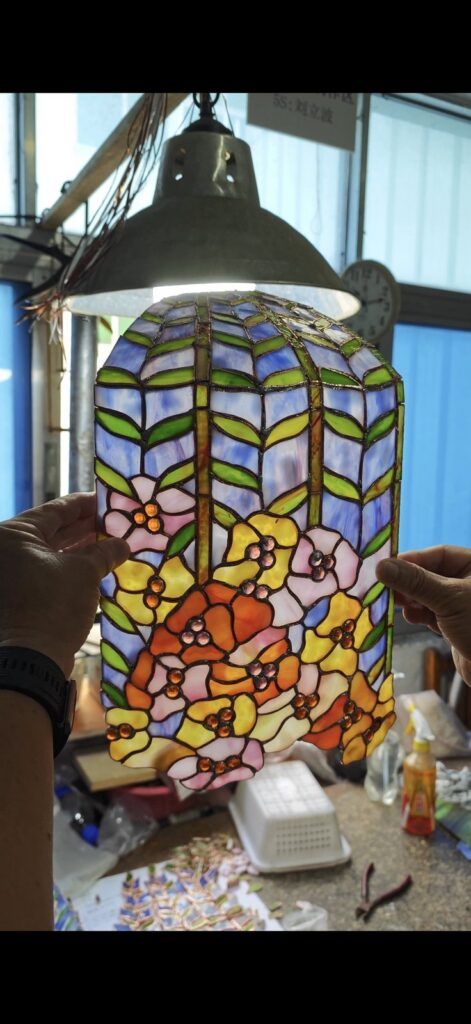
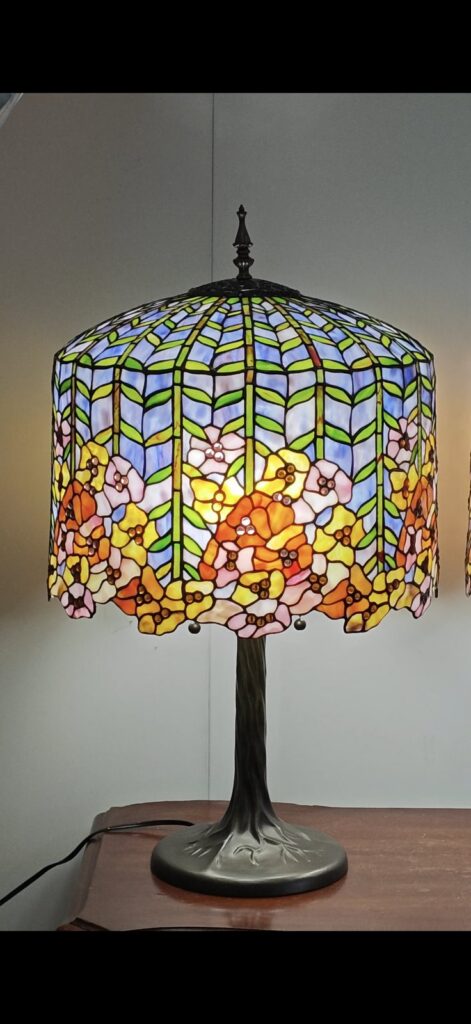
8. Fit the Base, Wire and Pack
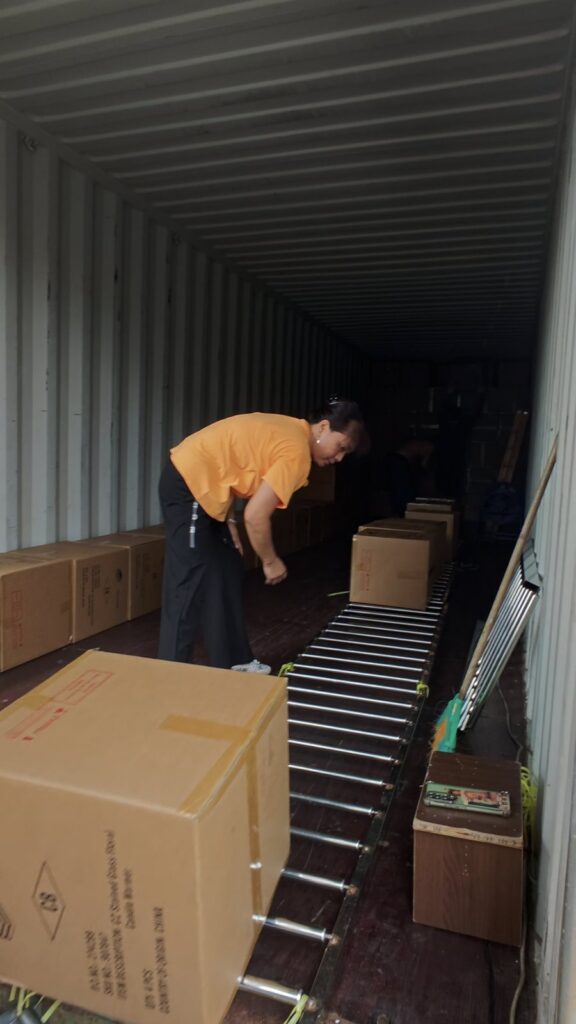
The shade is matched to its base, and the lamp is wired with the socket, switch, cord and plug required for its destination market. Each lamp is lit and checked before packing, and finished lamps go into export cartons for sea or air freight.
Why Some Shades Cost More Than Others
Most of the cost of a Tiffany-style shade is skilled labour, and labour follows the number of pieces. A dense Dragonfly or Wisteria shade has far more pieces to cut, foil and solder than a simple geometric shade of the same size. Glass choice and base material add to that, so when you compare quotes, compare piece count, glass and base, not only the diameter.
If you are buying for a shop or a project, our sample inspection record shows what to check when a sample arrives, and our wholesale page explains how ordering works. We also make reproductions of classic Tiffany Studios designs using the same process.